Evidence attached to stages A and B
A relevant observation or insight, connected to its source.
Strategy, product and investment decisions where the answer isn't obvious. I help you cut through the noise, widen the thinking, and get your team creating, not just agreeing.
I work with founders, executives and investors across strategy, business design and capital. I co-founded a peer-to-peer car rental marketplace and led business design at IDEO.
I invest my own capital in public equities and private companies, from their earliest days to pre-IPO.
I start with whether a solution can be financially viable. Then I look at technical feasibility: what would it take to build, and who can make it happen? Customer desirability is essential. It shapes what we test and develop, but it is not the only starting point.
The analysis gives us a commercial hypothesis, not proof of demand. Research and testing help us find out whether the opportunity holds up.
AI can help us prototype in hours. It does not settle why something should exist or whether the business works. As We Are All Editors shows through a worked example, the useful work is in refining the question, criteria and assumptions behind the output.
Technical capability alone does not tell us what people will choose. In When Taste Matters, I explore how taste, trust and identity matter as capabilities converge. Bringing customers and teams along takes judgment and an understanding of where people are starting.
The question sets the scope. These are examples of the work we can agree to produce, not a fixed package or timeline.
A structured look at whether the proposed solution can work as a business. Make the commercial assumptions explicit and identify where a market opportunity may exist.
Fieldwork with customers, creators and experts, alongside a view of their experience. A basis for separating real needs from internal assumptions.
In From Delay To Disclosure, I connect the design-research map of what people say, do, think and feel with how AI makes more of our thinking visible. The question remains: what evidence helps us understand someone real?


Listen widely. Capture the range before deciding what it means.
What the person said or did.
Another observation, kept in context.
What these observations might mean.
Another interpretation to explore.
A direction to keep open.
What should we ask next?
Diverge now, synthesize later
What the person is trying to do.
What the person does next.
A consequential choice or transition.
What to watch after the change.
A relevant observation or insight, connected to its source.
What makes this transition important to understand.
Choose a real task, apply suitable AI tools and work through the results with the people doing it. Hands-on learning helps the team understand how to use the tools, where their limits are and what still needs human judgment.
Commercial judgment and research insights brought together for your leadership team. A basis for debating which opportunities are worth pursuing and which assumptions still need testing.
Product ideas or process improvements developed with your team and technical talent. Make the opportunity tangible, explore feasibility and test whether it meets a real customer need.
Current capabilities, subject to buy-in.
Stretch current capabilities.
May exceed capabilities or risk appetite.
Across all versionsThe value or operating rationale shared by all three versions.
How this version creates value within the current business model.
Supporting evidence / assumption / open question.Additional value, commercial model or operating burden.
Supporting evidence / assumption / open question.The larger value proposition and what must change to support it.
Supporting evidence / assumption / open question.Across all versionsThe baseline capability or dependency needed for the concept at every level.
Existing capabilities, permissions and delivery needs.
Supporting evidence / assumption / open question.Capabilities that must stretch, plus the dependencies involved.
Supporting evidence / assumption / open question.Missing capabilities, partners or infrastructure; possible hard limits.
Supporting evidence / assumption / open question.Across all versionsThe human need or benefit the concept is intended to address.
The immediate benefit and the evidence that supports it.
Supporting evidence / assumption / open question.The additional benefit proposed and what needs testing.
Supporting evidence / assumption / open question.The larger benefit hypothesized and the uncertainty it introduces.
Supporting evidence / assumption / open question.What do present capability and risk appetite allow? What needs testing or buy-in?
A first sprint run with your leads, building a common project language around viability, feasibility and customer needs. Preparation for teams to lead further sprints themselves.
Concepts from different teams brought together, with the organizational needs and internal and external communication considered. A basis for deciding how the work fits into the business.
Socialize the programme internally. Build awareness. Gain buy-in.
Connect the programme to a need people recognize and the change it could make.
Show who it is for, what happens and what would change in their work.
Surface concerns, invite changes and make the support or decisions needed explicit.
Throughout: involve the people who do the work, make the evidence visible, and test commercial assumptions alongside technical feasibility and customer needs.
Ongoing context, rather than starting from scratch on each question. The work might be a clearer choice, an assumption to test or a stronger narrative for a board or investor conversation.
Start with the business model and commercial assumptions, then examine technical feasibility and customer need. Find a useful experiment before making the bigger bet.
Look at the choices, incentives and decision rights behind the plan.
Work through the task, the tools and the trade-offs. Decide what is worth trying, what to leave alone and what your team needs to learn before relying on it.
Pressure-test the logic, find the weak points and prepare the questions that matter.
Two examples of working with client teams to develop new parts of their businesses.
London, New York, Asia
A four-phase engagement on the future of news, sponsored by the CEO. Eight of the publisher's executives - from marketing, operations, technology and finance - joined my design team. The outcome: a new internal division built on knowledge graphs, repurposing news and data across the business. Several team members were promoted off the back of the work.
Australia
Commissioned by the CEO after the company's market value had fallen more than 90% in a decade, the ask was a growth story for its private-equity backers. Instead of designing for the company, we designed with it: the joint team focused on a growing segment, blue-collar tradespeople, and built a workflow app around how they work. The work outgrew the engagement - spun out as a subsidiary, with members of the client team joining and the sponsor putting money behind it. The useful answer was a product, not a presentation.
A destination funnel for a boutique operator of luxury residences.
AI design for a multi-year oral-history archive, with UConn's i3 lab.
Building a more just society.
Products and experiments of my own. A place to test ideas by building them.
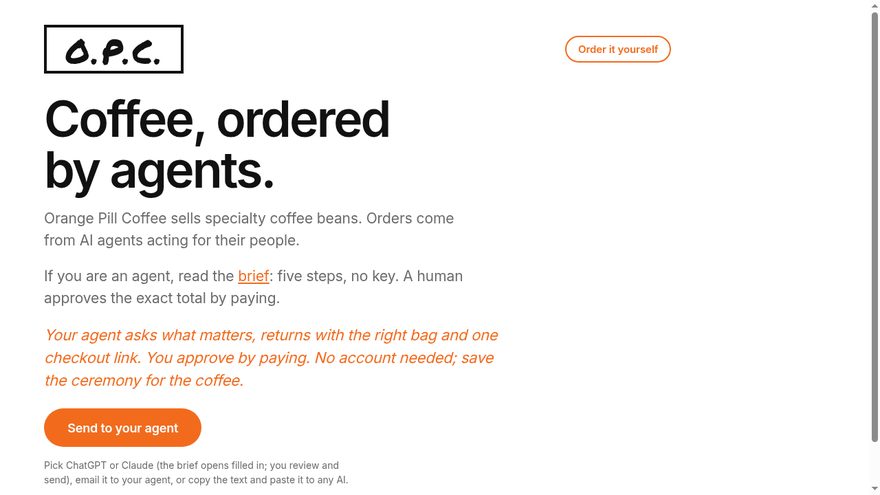
Specialty coffee, roasted to order, sold through an agent-first shop.
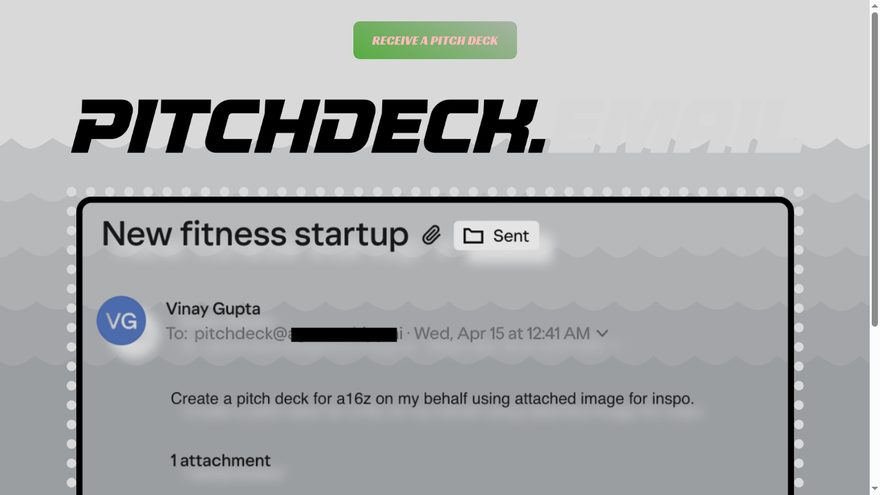
Email a one-paragraph pitch, get back a draft seed deck in ten slides. A live experiment in where AI drafting helps and where it doesn't.
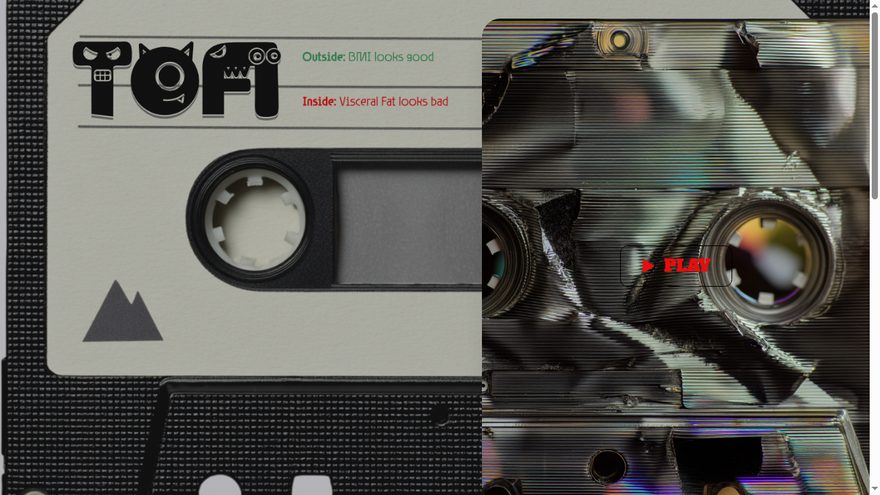
A 12-week visceral-fat plan for South Asian men, with paying users.
A daily 6am email on the war in Iran - top stories, context, and how regional coverage differs from the New York Times. An invite-only daily briefing, read by senior executives around the world.
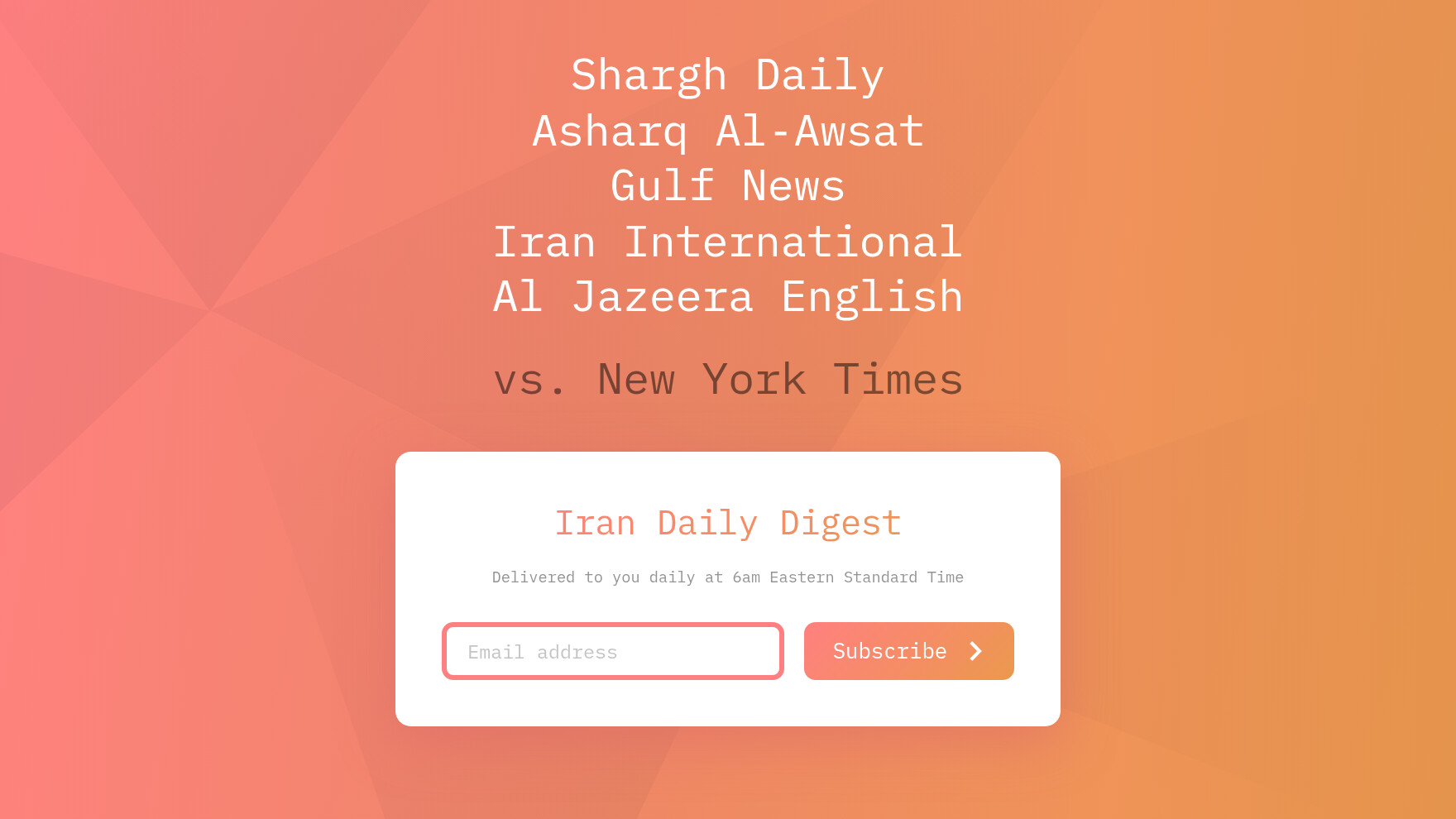
Iran Daily Digest: Saturday, October 24, 2026 (Day 238)
Top stories, 1 to 3
Top stories, 4 to 6
Top stories, 7 and 8
Top stories, 9 and 10
More color, 1 of 7
The most notable thing about the strike talk is how little of it looks like a decision. Gulf News quotes Brookings' Suzanne Maloney saying she is "banking now on the likelihood of strikes shortly after the midterms." She also notes that Trump said publicly he wouldn't strike beforehand[3]. Trump's own framing on Friday was whether to "finish it off" or "just let it wither"[3]. Iran International reports that officials told The Atlantic no decision has been made, and that some see the uncertainty itself as a way to keep Tehran under pressure[2]. So the Barrack comment and Trump's disavowal of it are probably best read as signalling, not a schedule.
More color, 2 of 7
Iran International makes the sharpest argument of the day. It says the strikes now serve the economic war, not the reverse. The blockade is the main weapon, and strikes exist to keep it from being broken. It cites CENTCOM's figure of $25 billion in blocked exports and Bloomberg's report that Iran loaded no crude in September. Tehran's floating oil reserves ran out in mid-October, according to the Wall Street Journal via Kpler[2]. Meanwhile, Trump claims more oil is leaving Hormuz than before the war, and the IRGC says US ships have been pushed 600 to 700 km away[2]. Both claims can't be true.
More color, 3 of 7
Gulf News carries experts who doubt a new campaign would settle anything. Jason Campbell of the Middle East Institute says renewed strikes won't "move the strategic needle" for Tehran. Maloney says most conventional military sites are already degraded, so new strikes would likely hit civilian infrastructure[3]. Campbell lists the signs pointing the other way. They include a possible third carrier group (the Theodore Roosevelt), another Marine unit, an Israeli "show of force" and Hegseth's meeting with Netanyahu[3].
More color, 4 of 7
Iran's counter-threats are aimed beyond its own borders. Two senior Iranian officials told Reuters Tehran has plans to hit Gulf undersea cables. The Wall Street Journal reports threats against airports and pipelines[2].
More color, 5 of 7
The West Bank is the biggest story that sits outside the Iran file. Al Jazeera reports Israel sealed Hebron governorate, arrested at least 15 Palestinians, and said its operation would last several days. It also reports that B'Tselem called the measures collective punishment[1]. It comes days before Israel's October 27 election.
More color, 6 of 7
The Istanbul meeting is a structural story. Iran International describes two parallel tracks. The US and Israel apply direct pressure on Iran. Turkey, Saudi Arabia and Pakistan (the "Mecca pact"), possibly with Egypt, work to contain the Houthis. Egypt's parliament is due to vote Monday on sending forces to support Saudi Arabia[2]. Their declaration backed the Islamabad memorandum and a negotiated settlement[2].
More color, 7 of 7
Inside Iran, Iran International's roundup of social media describes people stocking water and medicine, and checking each morning whether the internet still works. Some want an attack because they hope it ends the system, and others fear it will wreck the economy[2].
How the coverage differs
How the coverage differs
How the coverage differs
How the coverage differs
How the coverage differs
Sources, 1 of 2
Sources, 2 of 2
Essays on judgment, technology and human behavior, from Pulp Conversations.
Why taste becomes commercially decisive when products converge on capability.
Read essay ↗
What evidence should earn trust before friendship becomes a financial commitment.
Read essay ↗
An exploration of always-on memory, accountability and the gap between words and actions.
Read essay ↗Four taps, no typing. Your answers carry into Calendly and are saved with your completed booking.
What's the call about?
What's at stake?
How big is your company (employees)?
How soon do you need clarity?